
On a quiet afternoon inside a children’s hospital in England, Prince William arrived without ceremony to visit Tony Hudgell, a young boy whose story had already touched the hearts of many across the country.
There were no crowds gathered at the entrance.
No formal announcement had been made ahead of time.
The visit was intentionally low-profile, arranged privately with hospital staff and Tony’s family.
For William, the purpose was clear from the beginning.
This was not about publicity.
It was about connection.
Tony Hudgell had become known for his resilience after surviving severe abuse as an infant, an experience that resulted in life-changing injuries and the loss of both his legs.
Since then, supported by his adoptive family, he had inspired thousands through his determination, fundraising efforts, and unwavering spirit.
His journey had reached far beyond hospital walls, becoming a symbol of courage in the face of unimaginable hardship.
When William entered the ward, the atmosphere was calm, marked by the steady rhythm of medical equipment and the quiet movements of staff going about their work.
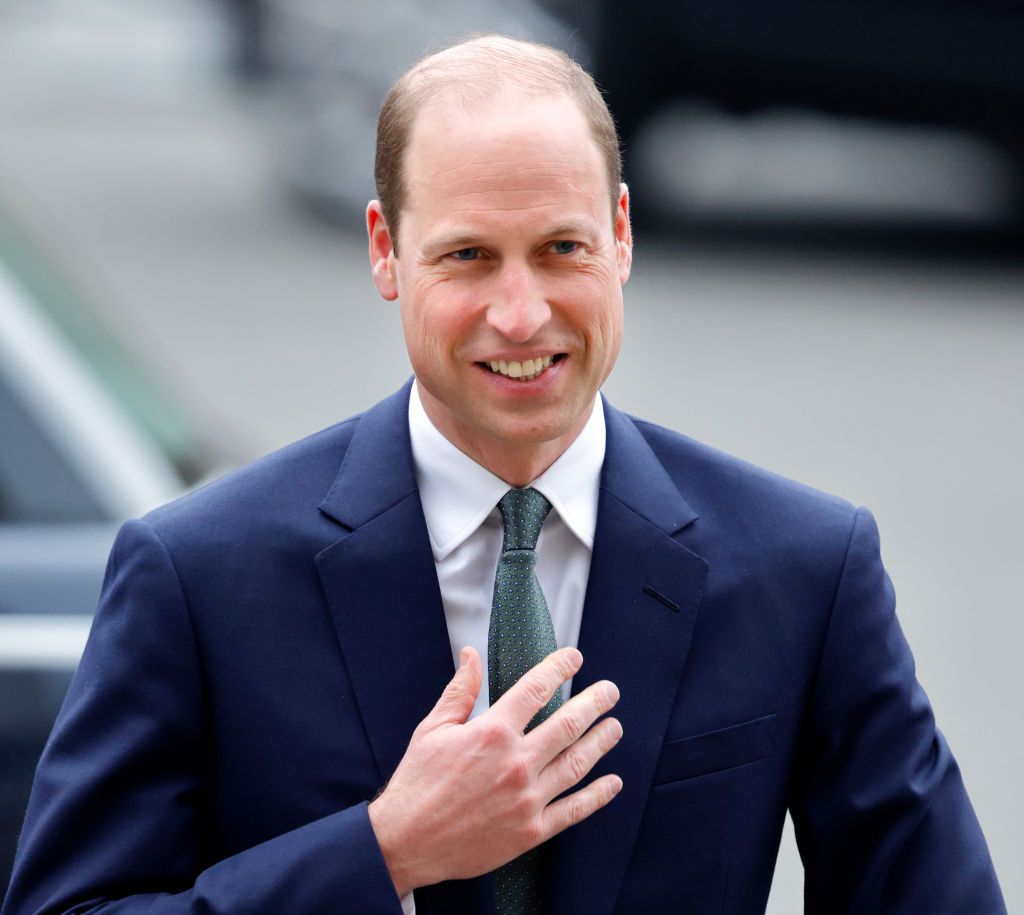
Tony lay in his bed, surrounded by soft light and familiar objects placed nearby to bring comfort.
His parents stood close, their expressions reflecting both pride and protectiveness.
There was a brief exchange of greetings, warm but understated.
Then something subtle happened.
Instead of remaining standing in a formal posture, William pulled a chair closer to the bedside and sat down.
The shift in position immediately changed the tone of the room.
He was no longer a distant figure defined by title.
He was simply present.
He leaned forward slightly, bringing himself to Tony’s level.
He spoke softly, asking about Tony’s day, his interests, and the things that made him smile.
Tony responded with quiet confidence, his voice small but steady.
The conversation unfolded naturally, without structure or expectation.
They spoke about everyday things.
Favorite activities.
Small victories.
Moments of progress.
At one point, William listened more than he spoke, allowing Tony the space to share in his own way.
Those watching noticed that the exchange was not rushed.
There was no sense of obligation in it.
It felt genuine.
After several minutes, William reached into his jacket.
He paused briefly, as if choosing the right moment.

Then he brought out a small, carefully prepared item.
It was a special badge, created to recognize Tony’s strength and the inspiration he had provided to so many people.
There was no announcement accompanying the gesture.
No explanation directed at the room.
William simply placed the badge gently into Tony’s hands.
The action was quiet, almost understated.
But its meaning was immediately understood.
Tony looked down at it, his fingers closing carefully around the edges.
For a second, he did not speak.
Then he looked up.
William met his gaze.
And in a voice barely above a whisper, he said, “I have you.”
The words were simple.
But in that moment, they carried weight far beyond their length.
They were not part of a speech.
They were not rehearsed.
They were a direct expression of support.
Something shifted in the room.
Tony’s expression changed first.
His eyes widened slightly, then softened.
The tension that had quietly existed beneath the surface seemed to release.
He held the badge closer to his chest, as if anchoring himself to the moment.
Then came the response no one had anticipated.
Tony reached out.
Slowly, deliberately, he extended his arms toward William.
It was not a grand gesture.
It was instinctive.
William did not hesitate.
He leaned in and embraced him gently, careful and attentive to his condition.
The contact was brief, but it was enough.
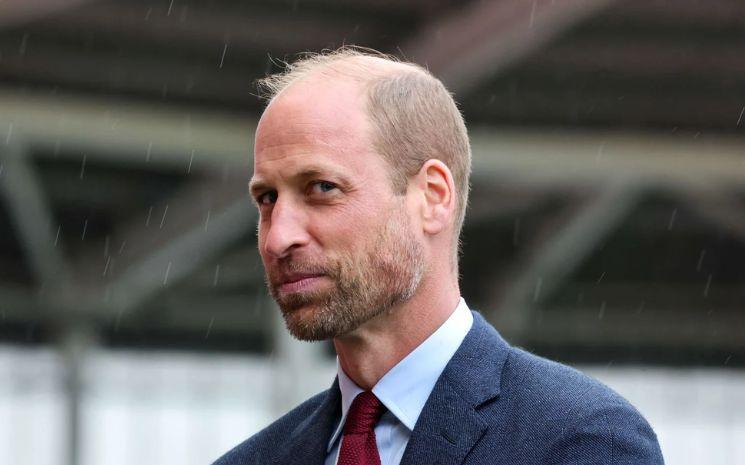
For those present, it marked a turning point.
Tony’s parents, who had remained composed until then, visibly struggled to hold back their emotions.
One of them turned slightly away, wiping tears quietly.
A nurse standing nearby paused, her usual professional composure giving way to the reality of what she was witnessing.
Even members of the staff who had seen countless difficult moments found themselves affected.
The room, once defined by routine, had become something else entirely.
It was no longer just a hospital space.
It was a place of recognition.
Of empathy.
Of shared humanity.
William remained seated for a few moments longer after the embrace.
He spoke again, softly, offering words of encouragement and reassurance.
He asked Tony to keep going, to keep believing in his own strength.
Tony nodded.
There was no need for long replies.
The understanding between them had already been established.
Before leaving, William placed a hand gently on Tony’s shoulder.
It was a small, steady gesture.
Then he stood.
He acknowledged Tony’s parents with quiet respect, thanking them for their strength and care.
There were no formal goodbyes.
No staged farewell.
He simply stepped back, giving the family space once more.
As he left the room, the atmosphere remained still.
Not empty, but full.
Full of what had just taken place.
In the hours that followed, those who had been present spoke about the visit in quiet tones.
They did not describe it as an official engagement.
They described it as a moment.
A moment where titles became secondary.
Where protocol gave way to presence.
Where a simple sentence and a small gesture carried more meaning than any formal address could.
For Tony, the impact of the visit extended beyond that day.
The badge remained with him, a symbol not only of recognition but of connection.
For William, the visit reflected a different dimension of his role.
Not one defined by ceremony, but by the ability to meet people where they are.
To listen.
To respond.
To be present.
In the end, what happened in that hospital room was not extraordinary because of who was there.
It was extraordinary because of what was shared.
A moment of honesty.
A gesture of care.
And a reminder that sometimes, the most powerful actions are the simplest ones.


.jpg)


0 commentaires:
Enregistrer un commentaire